
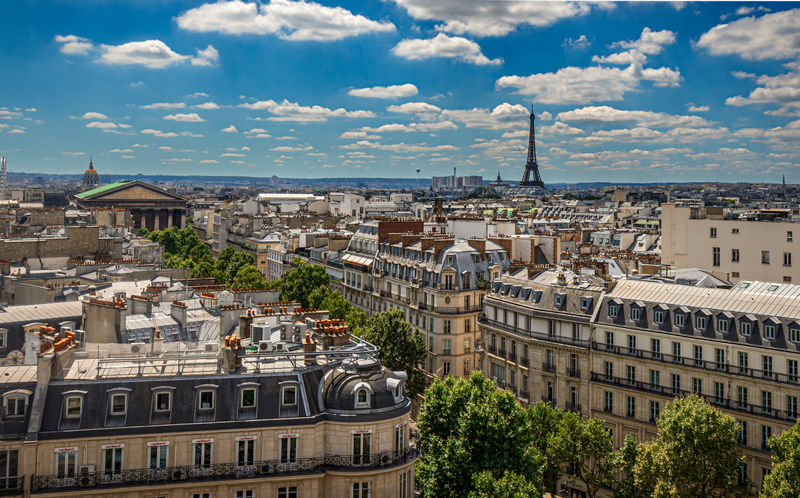
In the words of Audrey Hepburn, ‘Paris is always a good idea.’ If you’re a first-time visitor looking for an easy two days in Paris to save you time and hassle, our 2 days in Paris itinerary is the solution!
Deciding what to fit into a short break in Paris can be a challenge as there are many different Paris itineraries to choose from. Our 2 days in Paris itinerary has been written by a French native who was born in Paris. Follow our itinerary and maps to help you maximise your short visit to Paris.
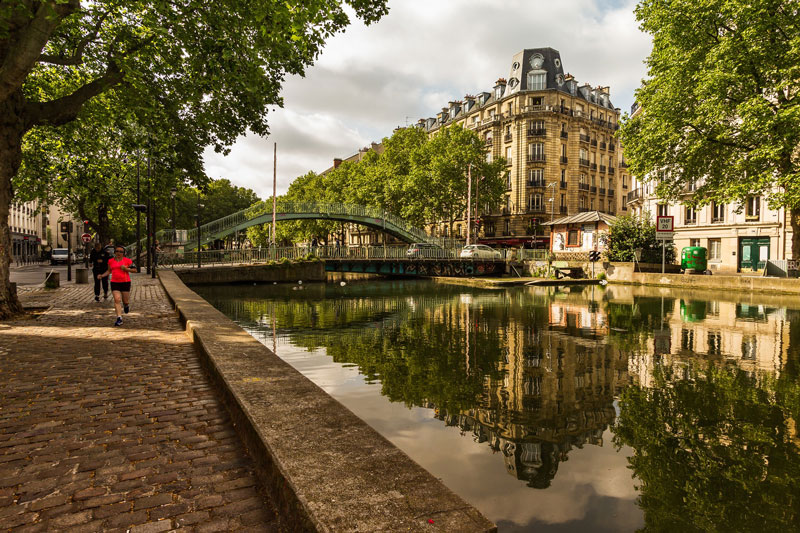
Whenever we visit Paris together, we always find new things to see and do. This city never fails to please, no matter how many times you visit or how long you stay. So, whether you are a first time visitor or a returning visitor, use our essential 2 days in Paris itinerary to see the most of Paris in a short period of time.
2 Days in Paris Itinerary – DAY 1
Did you know that a large area of Paris around the Banks of the River Seine is a UNESCO World Heritage Site? Paris is also one of the most romantic cities in the world! If you follow our easy 2 days in Paris itinerary, you will make the most of your time in this beautiful city and have a memorable weekend.
DAY 1 – La Rive Gauche and ÎIe de la Cité, Paris
The Rive Gauche means ‘Left Bank’. There are many sightseeing opportunities on the Left Bank. These include the Eiffel Tower, Musée d’Orsay, Sorbonne University, Panthéon, Les Invalides and the atmospheric café scene of the Saint-Germain-des-Prés neighbourhood.
1. Musée D’Orsay, Paris – French Art Museum
Most people head straight to the Louvre to catch a glimpse of Leonardo da Vinci’s Mona Lisa! Personally, I was disappointed at the size of this portrait. Also, the Louvre is enormous and you could spend the whole day here! If your heart is set on visiting the Louvre, this 2-hour guided tour with skip-the-line tickets may interest you. Click here for details.
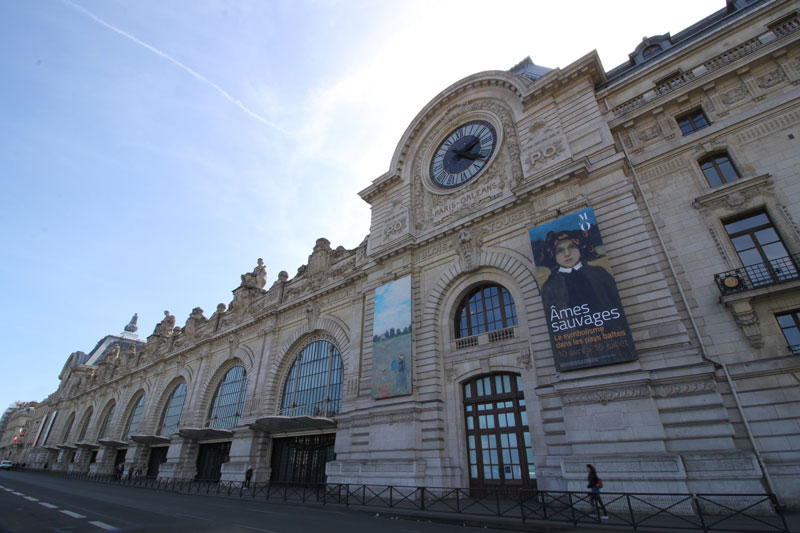
If you’re short for time, why not visit the more manageable Musée d’Orsay instead? This museum is on the Left Bank of the Seine (La Rive Gauche) opposite the Tuileries Gardens (Les Jardins des Tuileries).
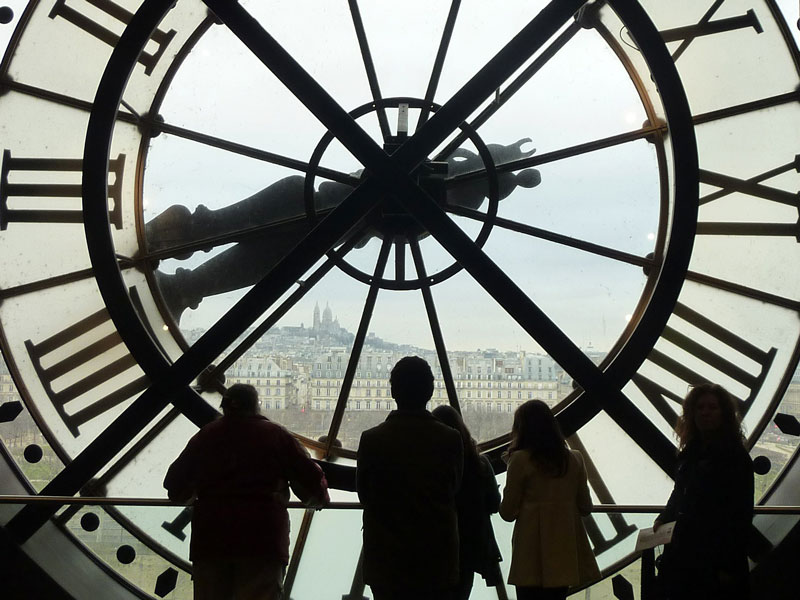
For lovers of French culture, the Musée d’Orsay displays mainly French art. It has the largest collection of impressionist masterpieces in the world. Famous artists include Monet, Degas and Renoir.
In addition to being a fabulous art museum, the Musée d’Orsay is also of architectural interest too. The museum was installed in the former Orsay railway station which was built for the Universal Exhibition in 1900.
Some say that the building itself was the Musée d’Orsay’s first ‘work of art’! Victor Laloux’s fabulous ornate golden clock still keeps time. It now dominates one end of the art gallery rather than the station platforms.
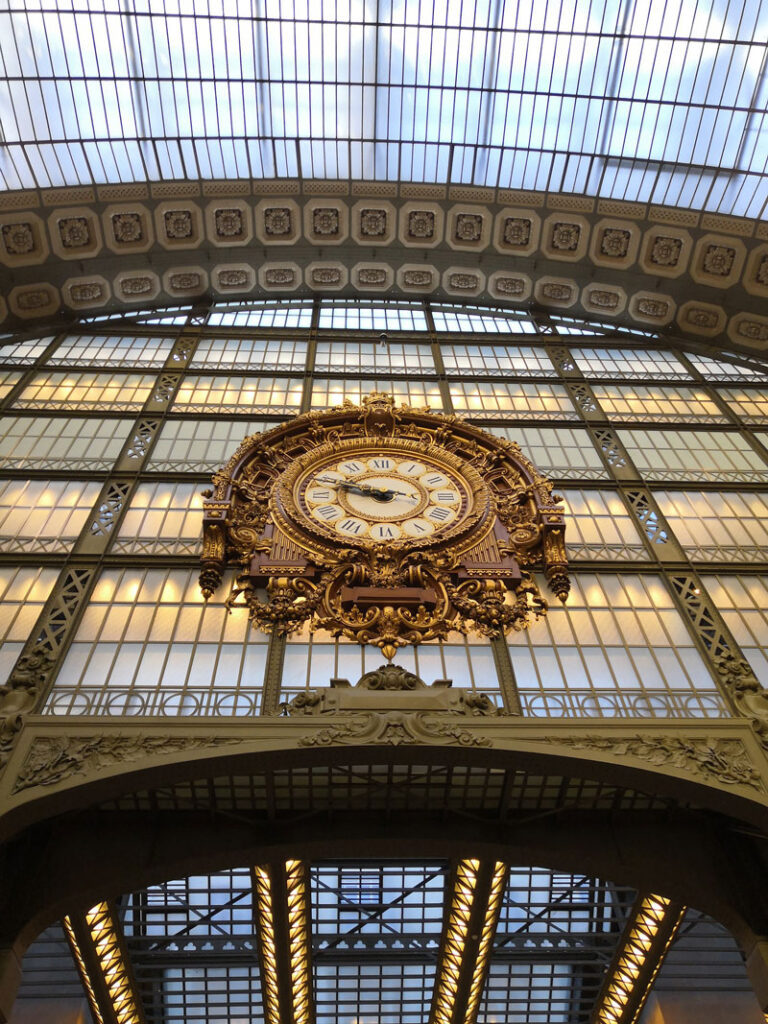
The Musée d’Orsay is closed every Monday, plus the 1st May and 25th December. Otherwise, the opening hours are 09:30 until 18:00. The museum is open late on Thursdays until 21:45. Tickets cost 16 Euros.
To save money, visit the museum on the first Sunday of each month. Admission on these dates is free for all visitors but you need to reserve in advance.
For more details about special exhibitions and there information about this art museum, check out the Musée d’Orsay website.
Interesting Paris Fact
Did you know there are five Statues of Liberty in Paris? One of them is inside the Musée D’Orsay, see below for the location of the others!
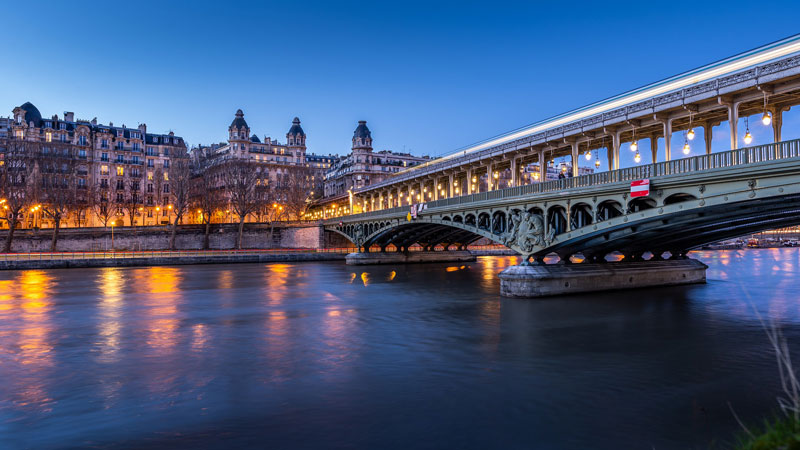
2. Le Pont des Arts & Le Pont Neuf
After leaving the Musee d’Orsay, turn right and walk along the Left Bank of the Seine (La Rive Gauche). As you walk, take time to soak up the sights and sounds of Paris.
The famous love padlocks which adorned the Pont des Arts bridge have been gradually removed. Instead, the Parisian authorities have replaced parts of the bridge with Plexiglass sheets. There were concerns about structural damage owing to the weight of the padlocks attached to the bridge.
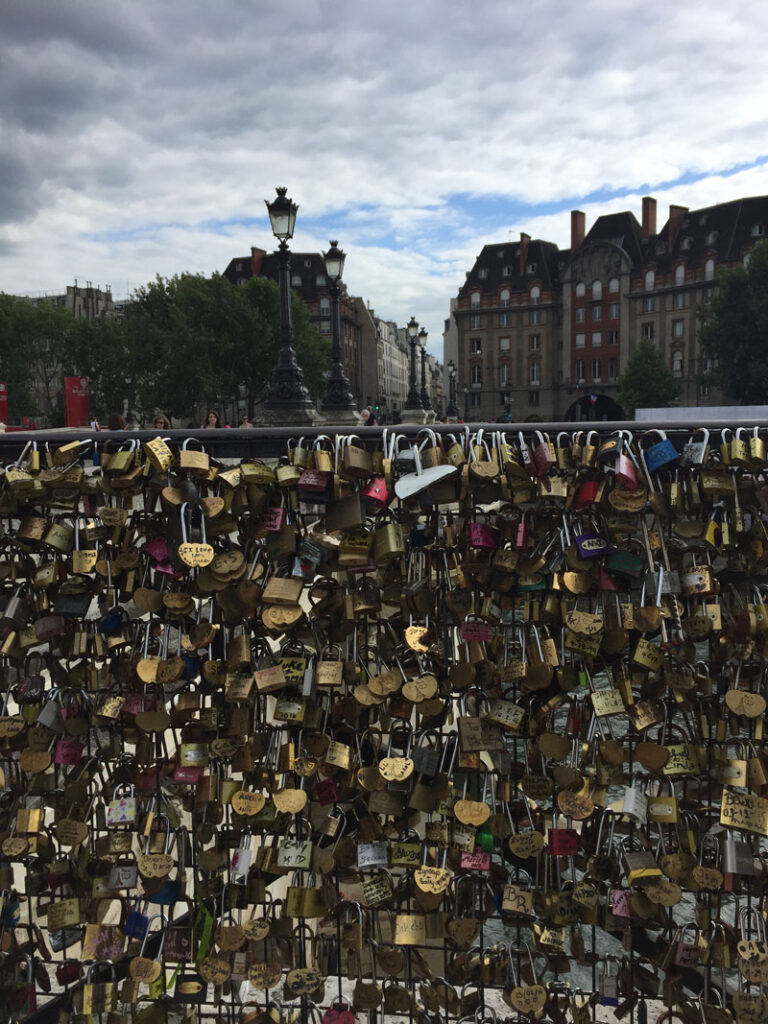
However, on our stroll along La Rive Gauche, we crossed the Pont Neuf and found that lovers have continued to leave their love tokens here. We chose not to add to the number of padlocks out of respect for the city.
3. Notre-Dame Cathedral, Paris (Close due to fire re opening soon)
Keep walking and you will come across the magnificent gothic Notre-Dame cathedral (Cathédrale Notre-Dame de Paris). Tragically, Notre-Dame was damaged significantly in a fire on 15 April 2019.
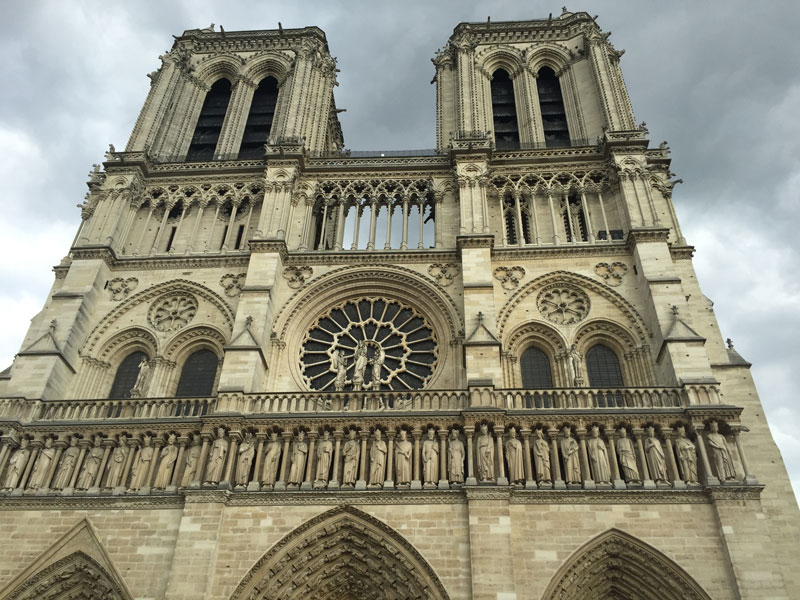
Now Notre-Dame Cathedral is open to visit, more information here
The first stone of Notre-Dame was laid in 1163. Notre-Dame is situated on an island in the middle of the Seine called ÎIe de la Cité. The cathedral was the centre of ancient Lutetia (Gallo-Roman Paris). Notre-Dame continued to remain the centre of medieval Paris.
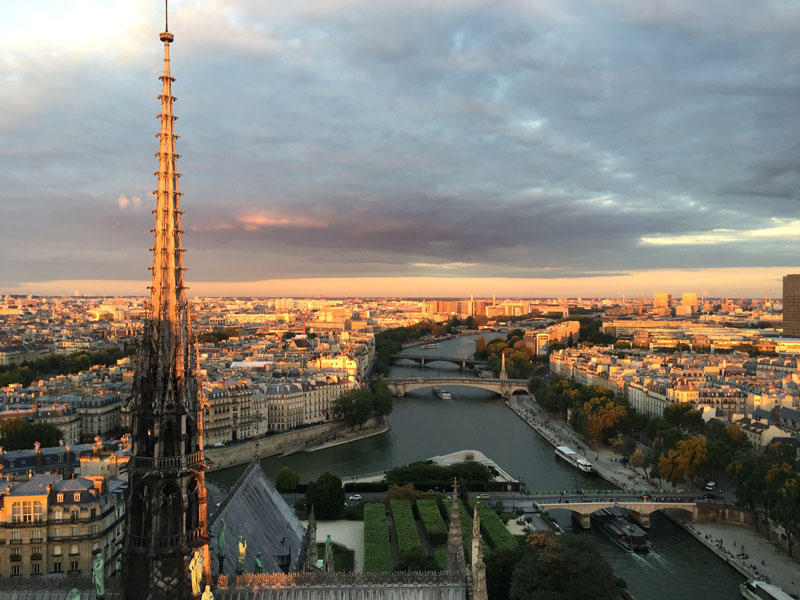
Even today, Notre-Dame is the centre of contemporary Paris. Outside the cathedral, see if you can find the Point Zero des Routes de France.
Embedded in the concrete floor in front of Notre-Dame is a brass plate. A compass star marks the exact centre of Paris. This distance from Paris to all other locations in France is measured from this point.
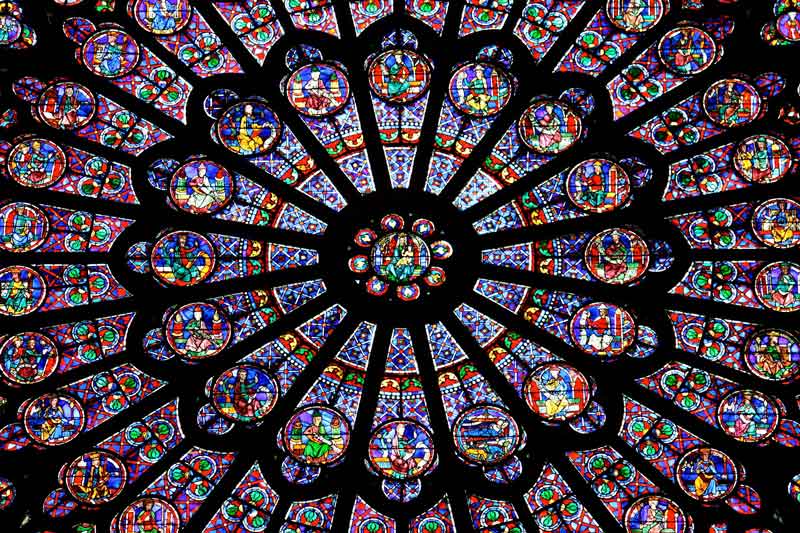
Inside Notre-Dame, the Rose Window is a stunning stained-glass window. The spectacular Rose South or Rose Sud is dedicated to the New Testament. It has a diameter of nearly 13 metres with 84 panels spread over four circles. The colours are an incredible sight in the gloomy interior of the gothic cathedral.
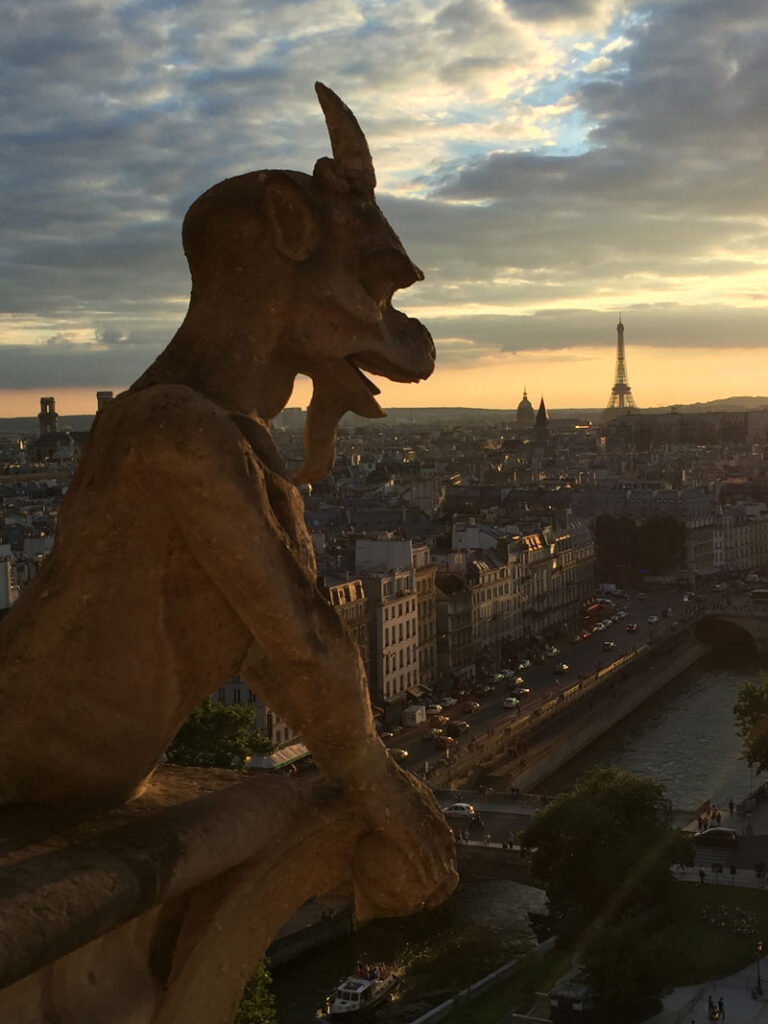
Don’t leave Notre-Dame without climbing its towers*! There are 422 steps to climb. At the top, you will enjoy a unique view of the Paris skyline and gothic gargoyles! Visit at sunset for amazing photo opportunities with silhouettes of the Eiffel Tower and Sacré Coeur.
There is currently a 10 Euro charge* to climb the towers of Notre-Dame, but it’s definitely worth it! Numbers are restricted for safety reasons and there is no fast track or online ticketing. You can buy your ticket on site with an allotted time. Alternatively, use the ‘JeFile’ app which is downloadable for free on the Appstore or Googleplay.
For us, this imposing cathedral is a must see. It forms part of the UNESCO World Heritage Site and entrance to the cathedral is free*! Before you visit, make sure you check out the official Notre-Dame website as it’s full of fascinating facts and information.
4. Saint-Germain-des-Prés
Saint-Germain-des-Prés is in the 6th Arondissment of Paris and the neighbourhood was once known for its literary artistic celebrities. Today, it’s a great place to shop, eat and drink and enjoy some cultural experiences.
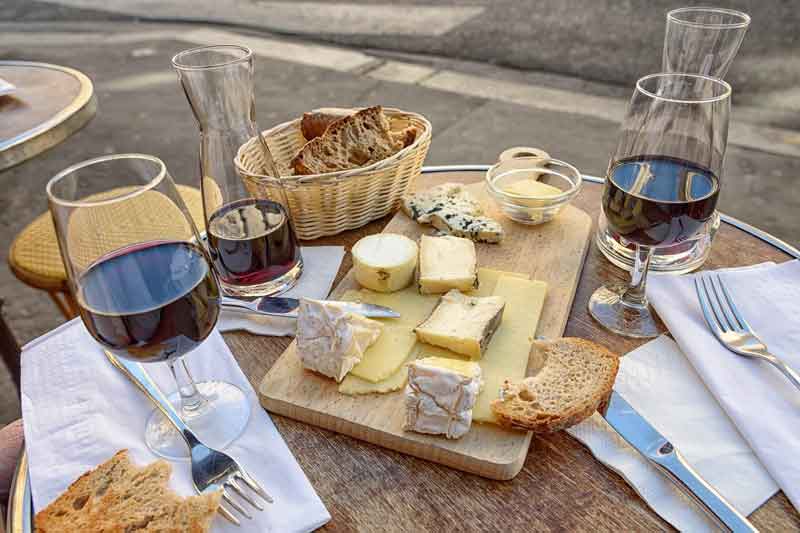
Sit back and soak up the relaxed atmosphere of this area on the Left Bank of the Seine whilst you eat or drink at one of the many cafés, brasseries, restaurants and bars. Favourites include the famous literary café, Les Deux Magots, the Café de Flore or Brasserie Lipp.
Afterwards, browse the many art galleries, antique stores, street markets and clothing retailers or take a walk in the geometric Jardin du Luxembourg which was inspired by the Boboli Gardens in Florence. Look out for the Statue of Liberty on the western side of the gardens.
If you love art, don’t miss the Musée Delacroix which is dedicated to the French painter or the Ecole des Beaux Arts which has open days in June and July. Other cultural musts include the Abbey Saint-Germain-des-Prés which has the oldest bell tower in Paris and the Eglise Saint-Sulpice which was the setting for much of the filming in The Da Vinci Code which starred Tom Hanks.
5. La Sorbonne
Since the 13th Century, the beautiful Sorbonne has been a prestigious university in Paris. It is located in the Latin Quarter close to the Jardin du Luxembourg in the 5th Arondissement.
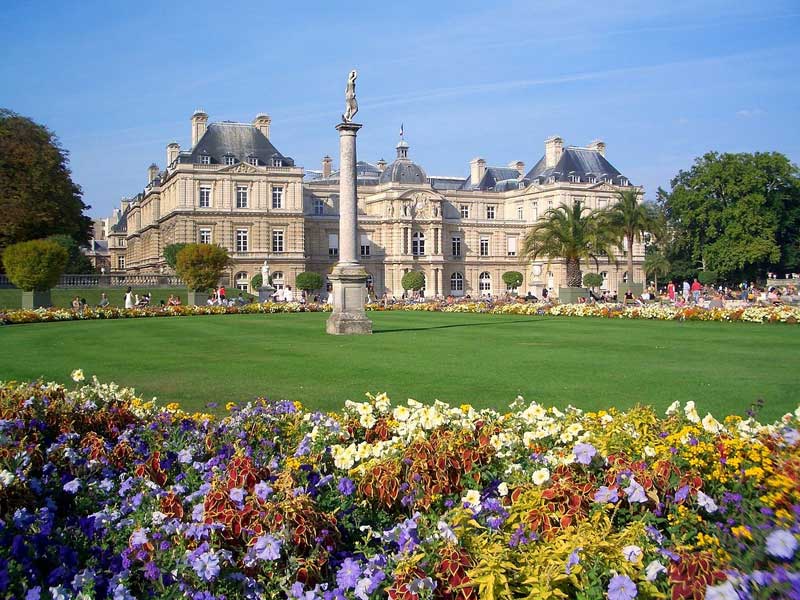
The Sorbonne is full of architectural delights including the Chapel, the Observatory and the Grand Amphitheatre. To visit this magnificent building and its elegant rooms, you need to take a 1.5 hour guided tour in groups of 10-30 people.
6. Le Panthéon
The Panthéon was a place of worship designed by Soufflot to rival St Paul’s Cathedral in London and St Peter’s Basilica in Rome. Unsurprisingly, this grand building in the 5th Arondissement was inspired by the Pantheon in Rome and is an architectural masterpiece.
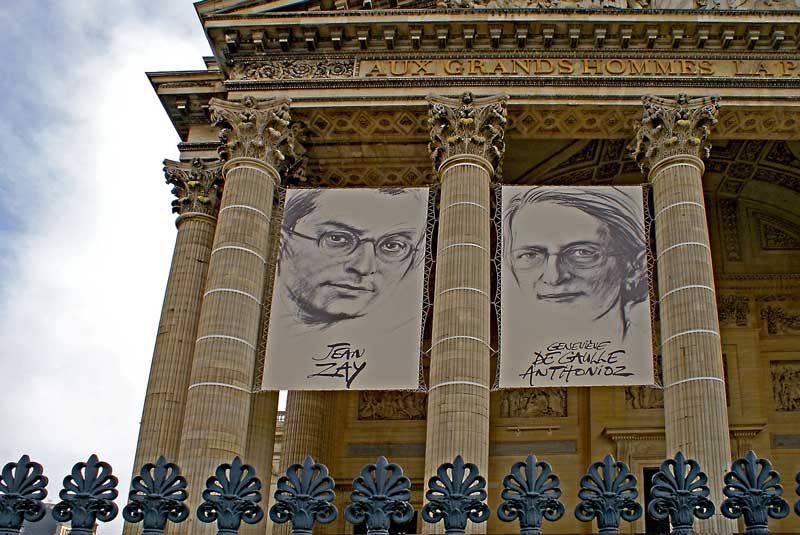
Highlights of the Panthéon include a visit to the crypt and its permanent exhibition. This honours the influential French individuals who are buried here like Voltaire, Rousseau and Dumas. In addition, you can marvel at Foucault’s pendulum which demonstrated Earth’s rotation.
7. Les Invalides
If you are interested in military history, Les Invalides in the 7th Arondissement is well worth a visit. Orginally, King Louis XIV ordered Les Invalides to be built in recognition of the sacrifices of the country’s soliders. Today, it is a museum celebrating the military history of France and is still a hospital and care home for French war veterans.
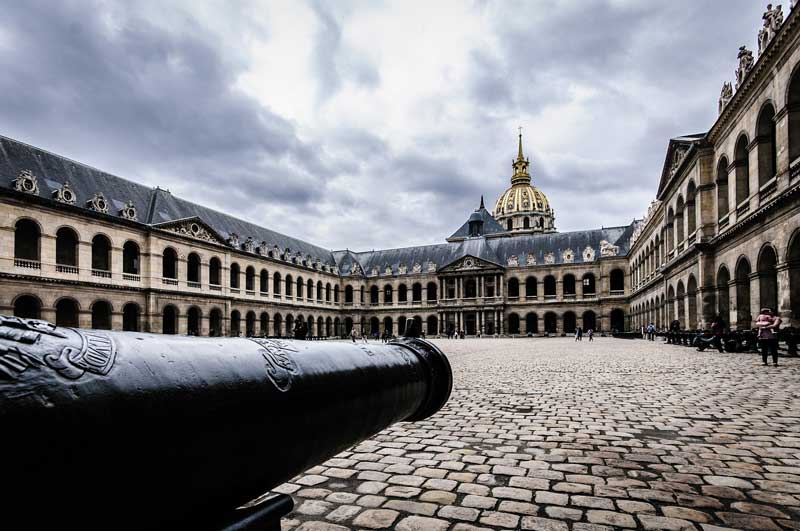
Les Invalides is a complex of 17th Century structures and courtyards. Its Army Museum features a large collection of arms, armour, paintings and decorations right up to the end end of World War II. Monuments include the tomb of Napoleon who is buried in the church (Dome des Invalides).