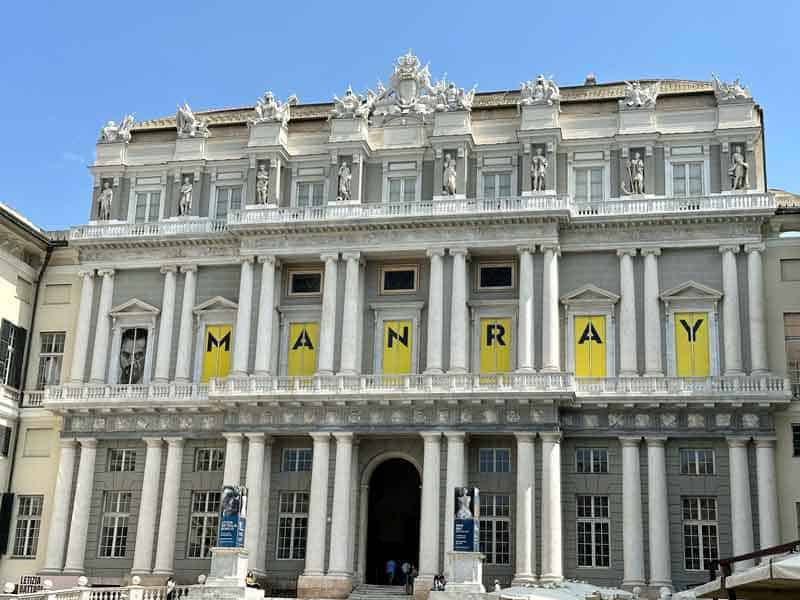
In the northern part of Italy, nestled along the charming Italian Riviera, is the historic port city of Genoa. With its rich maritime heritage, historic narrow streets lined with colourful architecture, and delicious cuisine, one day in Genoa offers a rewarding experience for travellers seeking a true taste of Italy.
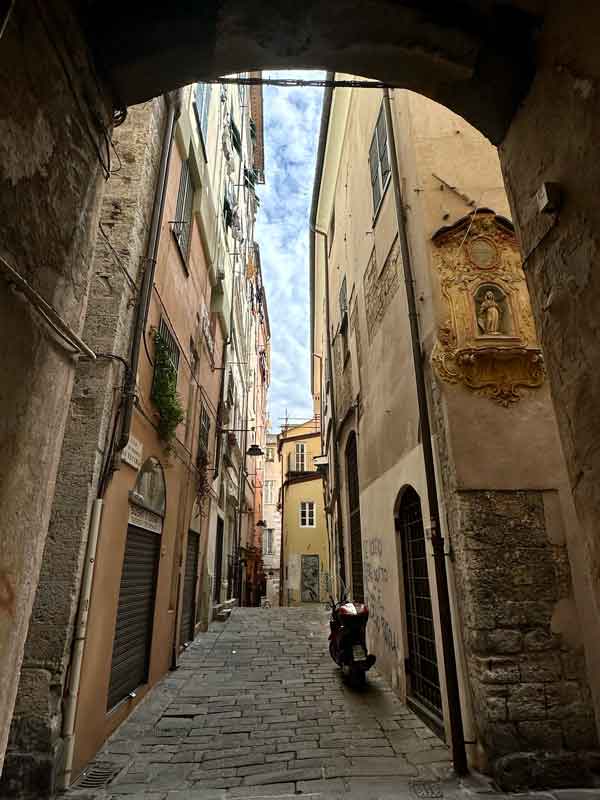
One day in Genoa is enough to explore some of its treasures: marvel at the Rolli Palaces, relax at Piazza De Ferrari and find Columbus’ house. Then discover the city’s hidden charms: take the lift to the Spianata di Castelletto, navigate the maze-like Medieval quarter, and explore the Porto Antico.
From hidden gems to a relaxed ambiance that encourages you to slow down and enjoy the moment, Genoa holds the key to a memorable visit. Join us as we share with you our authentic experience of one day in this surprising city and uncover the treasures that awaited us in every corner.
What’s the Best Way to Explore Genoa?
For us, Genoa was a chance discovery as the port happened to be the first destination on our MSC World Europa Mediterranean cruise. If you have discovered our website before, you will know that we usually love to travel by backpack and seek out authentic travel experiences. The cruise was an experiment to see if it was possible to have authentic travel experiences from a cruise ship base.
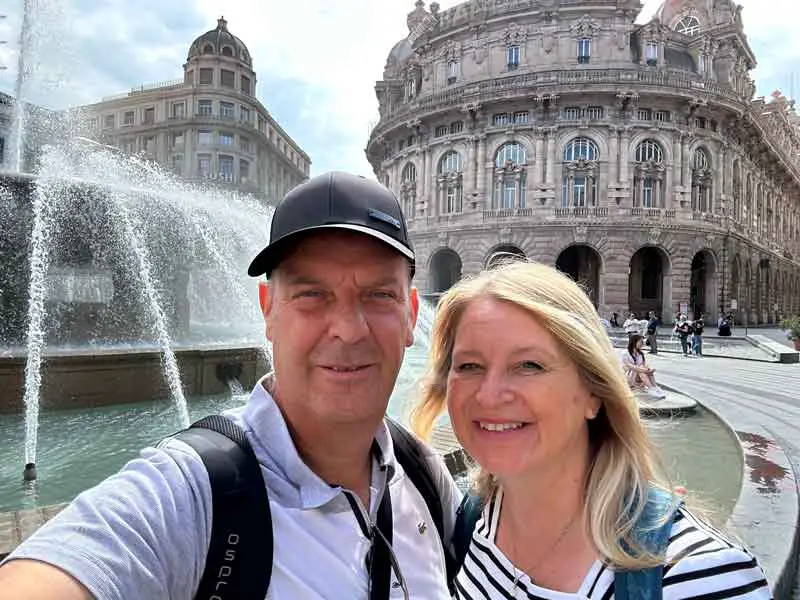
Even though we had just one day in Genoa (8 hours on land), we chose to discover the city independently on foot. We believe that walking the streets is the best way to meet local people, immerse yourself in a city’s sights and sounds and make spontaneous discoveries that often turn out to be the most memorable experiences.
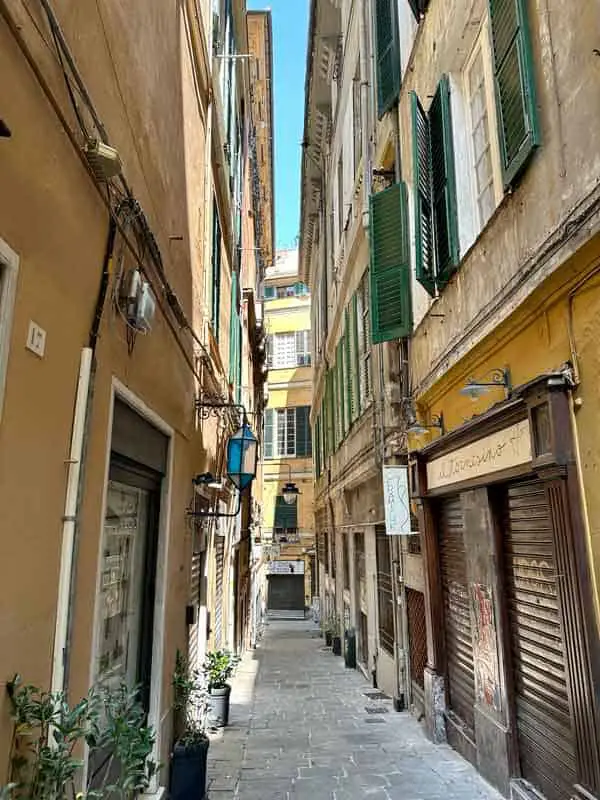
Thanks to Genoa’s conveniently compact size and a helpful walking tours map (available from the Tourist Office just outside the cruise terminal), we managed to optimise our time exploring the city and saw a surprising amount. In fact, we walked a healthy 13 km during our one day in Genoa!
However, if you want to save your energy or have even less time to spend in Genoa, the Tourist Office offers a convenient solution with their Metrominuto tours. These Metro tours provide a practical alternative for exploring Genoa by public transport whilst minimising the strain on your legs!
How to Spend One Day in Genoa
During our one day in Genoa, we explored the waterfront of the Port Antico and the narrow streets of the Medieval quarter. We also had time to discover the historic Rolli Palaces, relax by the fountain in the Piazza De Ferrari and enjoy the panoramic views from the Spianata di Castelletto.
One Day in Genoa Itinerary
Read on to discover our one day in Genoa itinerary in which we share our authentic experience of discovering this interesting city with tips to help you make the most of your visit and enjoy some of the sights for free.
1. Discover Genoa Old Port (Porto Antico)
Our one day in Genoa started at the cruise ship terminal so it was a natural choice to walk along the waterfront and visit the Porto Antico first. It took about 20 minutes to reach the old port from the cruise ship terminal and it was a relaxing way to reach the city centre.
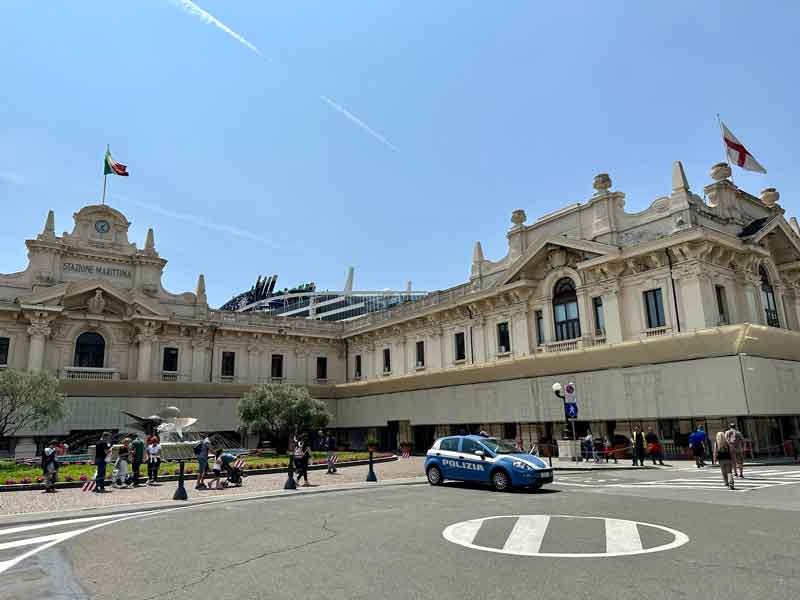
Although the Porto Antico was once a busy maritime port, today it is quite touristic and is home to many attractions, entertainment spots, and places to eat.
Whilst we enjoyed our walk along the waterfront seeing what was here, we chose not to pay to visit any of the Porto Antico attractions. We preferred spending our time exploring the historical centre (centro storico). However, in the Porto Antico area we did find a couple of gems (street art and the Palazzo Giorgio) that shouldn’t be missed and you can find details of how to find them at the end of the list below.
One of the good things about the Porto Antico is that you can soak up many of the sights and sounds for FREE from the quayside (check out the tips below). However, if you have kids, there are plenty of fun things to keep them entertained during one day in Genoa.
Here are some of the interesting things you could see and do in the Porto Antico:
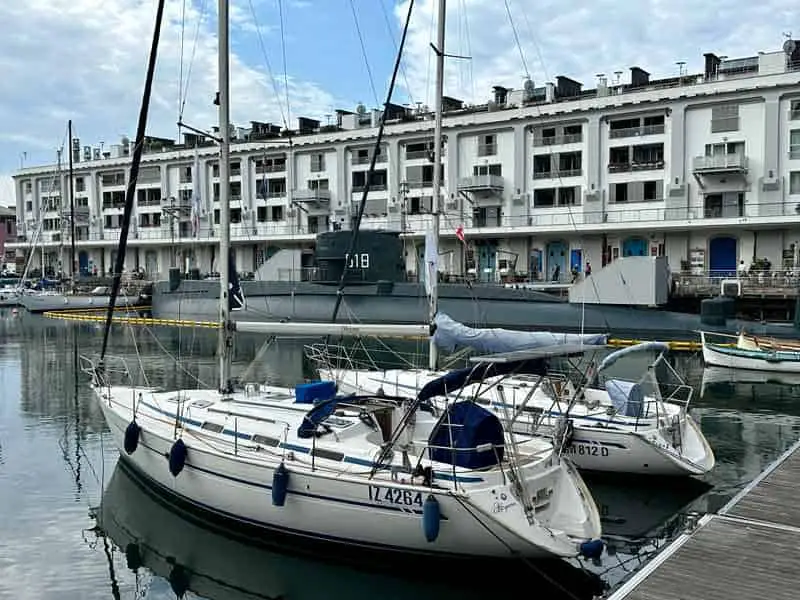
Galata Musem of the Sea (Galata Museo del Mare)
An interesting museum about maritime history that has many artefacts including a replica of a 17th century galley, documents signed by Christopher Columbus (who was born in Genoa) and the chance to board a real submarine – the S518 Nazario Sauro.
TIP: We enjoyed the sight of the submarine and other maritime artefacts for FREE as there is an open-air display in the small marina to the left of the museum.
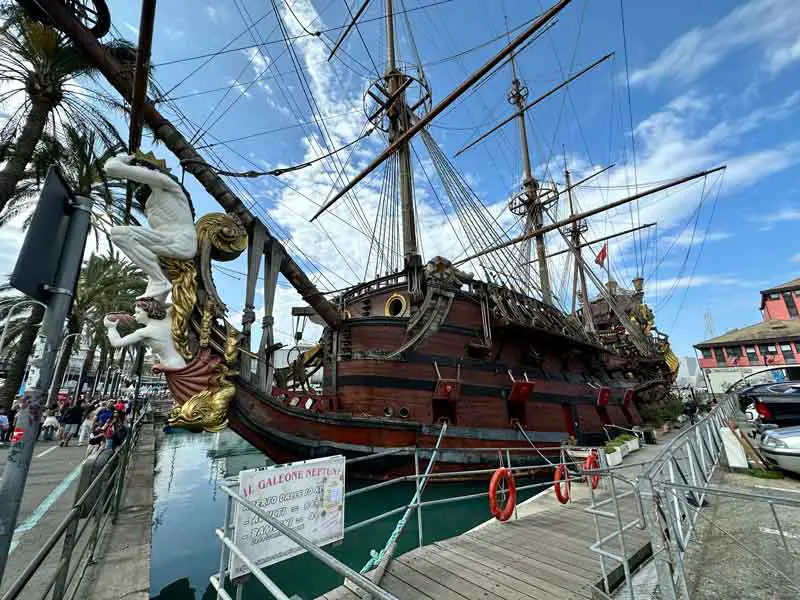
Galeone Neptune
An eye-catching and beautiful reconstruction of a 17th century pirate ship built for a 1986 film by Roman Polanski called “Pirates”!
TIP: We enjoyed the sight of this magnificent sailing ship from the quay for FREE as the Galeone Neptune is moored right beside the promenade at the Porto Antico.
Genoa Aquarium (Acquario di Genova)
The largest aquarium in Europe with impressive exhibits that are beautifully presented.
TIP: The queues to buy tickets at the aquarium were quite long when we visited Genoa in the summer months, so we recommend that you buy your tickets online in advance. To avoid disappointment on the day, click here to buy time-stamped skip-the-line tickets with GetYourGuide.
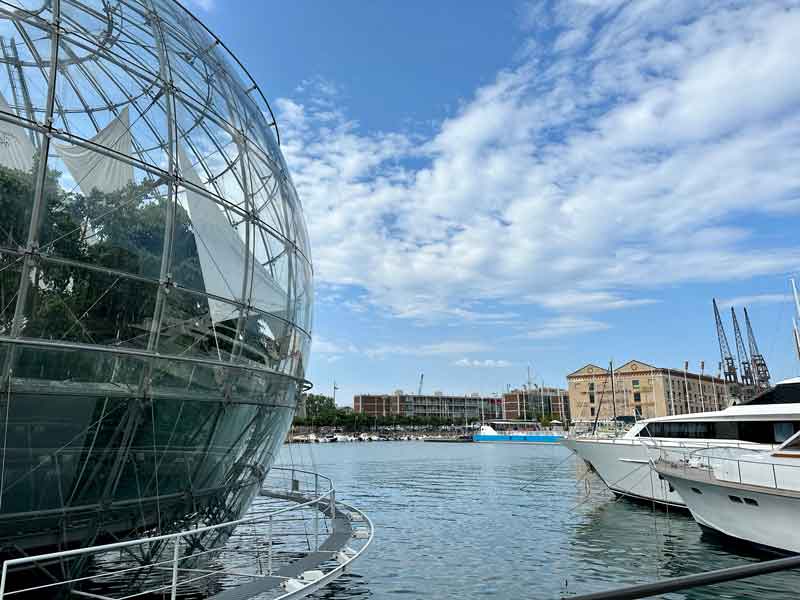
Tropical Biosphere (Biosfera)
A tropical forest built in a dome made of steel and glass that is suspended over the sea.
TIP: We admired the architecture of the tropical Biosphere for FREE from the quayside to the left of the aquarium.
Bigo Panoramic Lift
A lift that offers a 360-degree view of the city.
TIP: To enjoy panoramic views of Genoa, we opted to head into the city and took the lift to the Spianata di Castelletto for FREE!
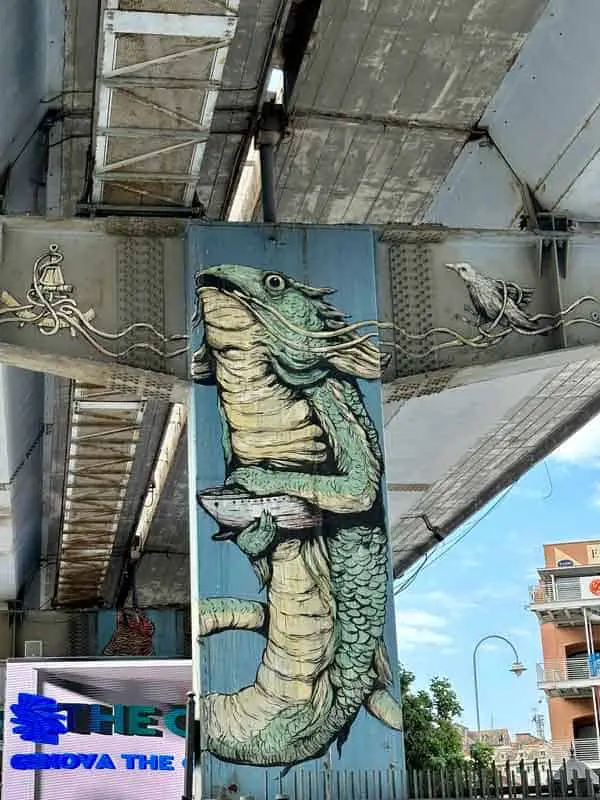
Genoa Street Art – Sopraelevata Underpass
As we left the Porto Antico and headed towards the medieval quarter of Genoa, we walked under the elevated Sopraelevata road. Here we spotted some cool street art that had been sprayed on the steel columns and girders.
Palazzo San Giorgio
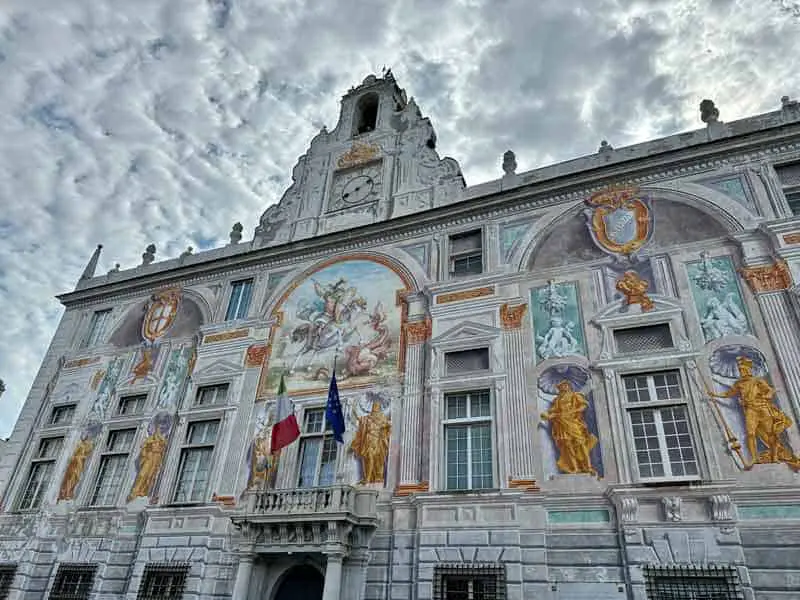
Directly opposite the Porto Antico, we discovered a more traditional style of painting.
The Palazzo San Giorgio is a magnificent, restored Renaissance building covered with a frescoed façade that features St George slaying the dragon. In keeping with its long maritime history, the building now houses the Western Ligurian Sea Port System Authority.
2. Roam the Medieval City of Genoa (centro storico)
The historic centre (centro storico) of Genoa is one of the most extensive medieval historic centres in Europe and is the most densely populated. The medieval part of Genoa is a maze of narrow alleys or caruggi that criss-cross the city, so we were excited to explore the passageways, get lost and make some interesting discoveries.
Arched Porticoes of Sottoripa
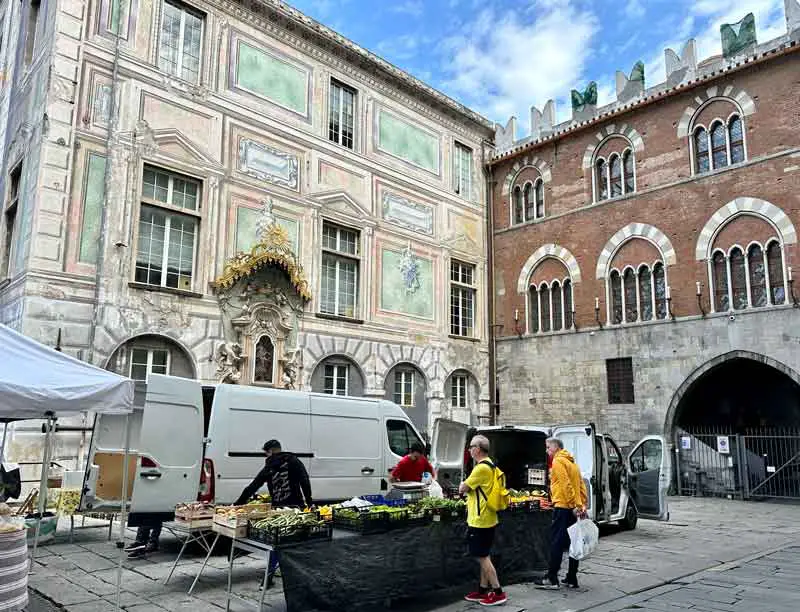
Immediately behind the Palazzo San Giorgio, you can access the medieval part of the city. On the outskirts, we discovered a tiny market selling local produce and an intriguing porticoed street (Via di Sottoripa) with small shops, bars and restaurants that is said to be the oldest arcade in Italy dating to 1125.
Narrow Caruggi & Local Specialties
Our culinary journey continued as we wandered into the maze-like streets and passages of the medieval city called caruggi.
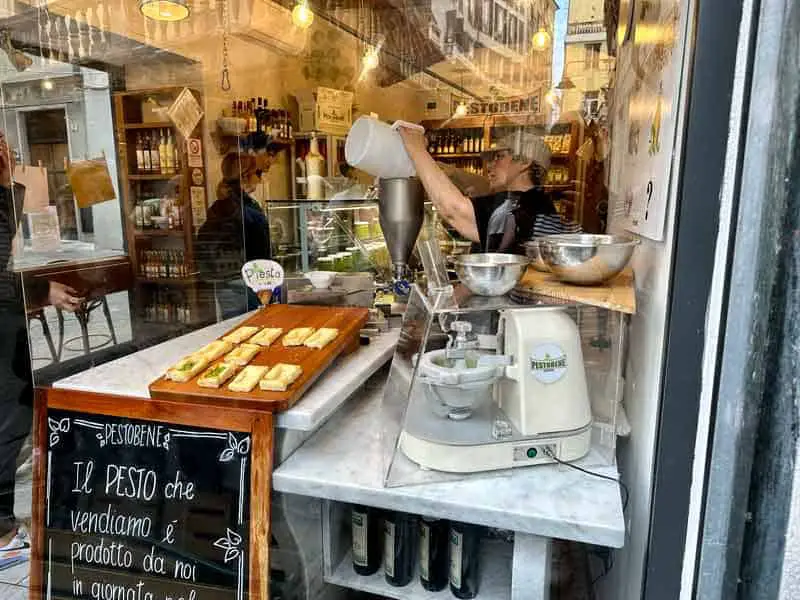
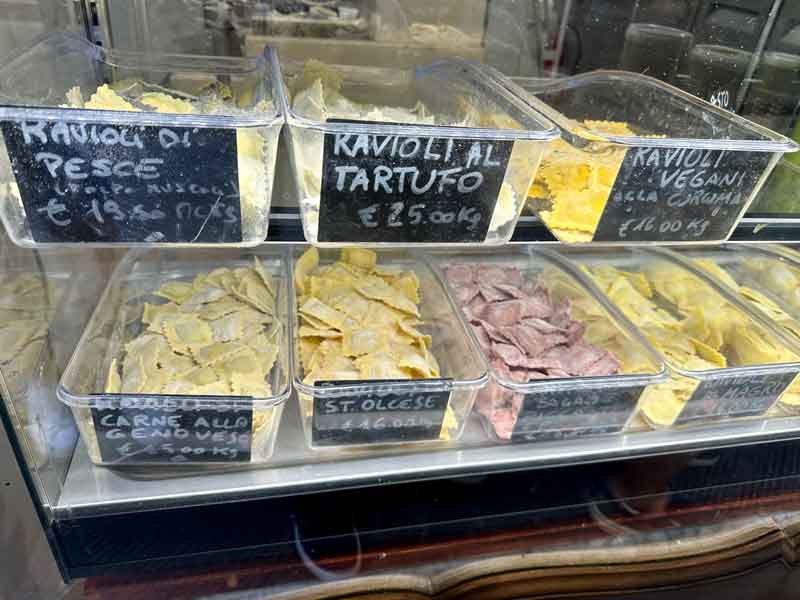
Lining these paved streets were more authentic small artisan shops making fresh pasta and a local Genovese specialty called Piesta. This was a delicious rectangle of lightly salted puff pastry filled with fresh Pesto made from basil, pine nuts, parmesan garlic and olive oil!
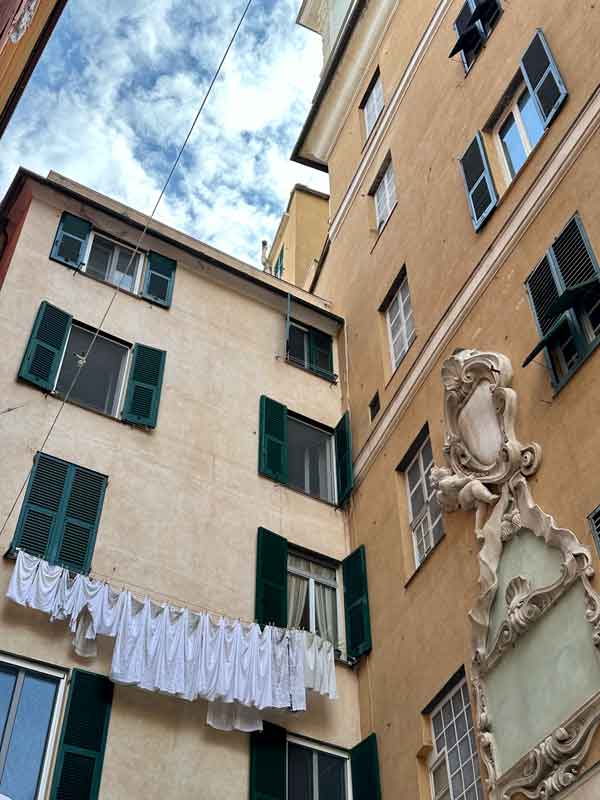
As we continued to explore the narrow streets of the medieval city, tall buildings in earthy colours loomed over our heads with dark green shutters and strings of washing flapping in the breeze.
In this part of the city, you never knew what you might find. We suddenly stumbled upon low circular chapels that were squeezed improbably in the limited space between residential dwellings. Then, at the next turn, we unexpectedly found ourselves in small piazzas or squares.
San Lorenzo Cathedral
Within the medieval city, halfway up the Via San Lorenzo, we came across the Gothic San Lorenzo Cathedral.
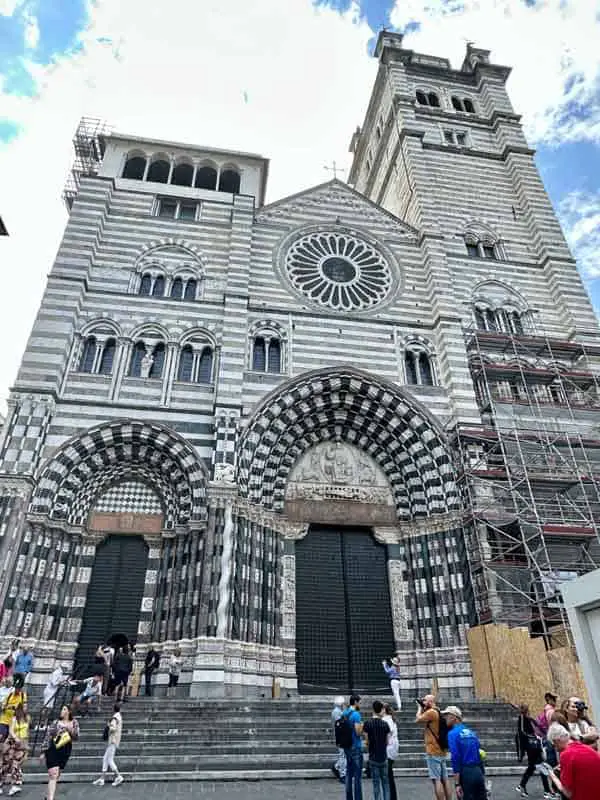
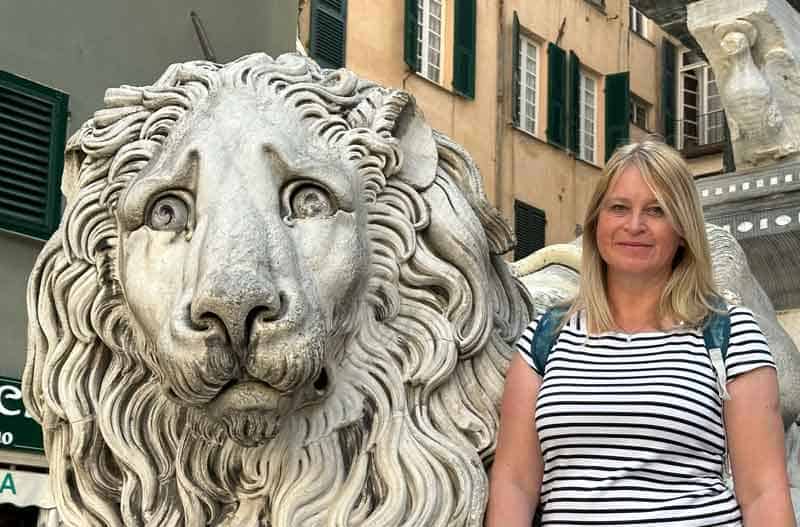
The exterior of the cathedral has a very bold striking grey and white stone striped façade and rather sorrowful-looking lions guarding the staircase.
Inside the cathedral are many treasures including the Sacro Catino – an emerald-coloured glass dish that some believed to be the Holy Grail.
Piazza Matteotti & the Palazzo Ducale
The Via San Lorenzo leads to the Piazza Matteotti where we were able to admire the façade of the Palazzo Ducale, formerly the Doge’s Palace from 1339.